

Cupping therapy can be a meaningful part of care for low back pain and sciatica, but it works best when it is used for the right reasons and paired with a plan that matches the true driver of your symptoms. Many people try cupping after dealing with recurring flare-ups that disrupt sitting, driving, workouts, sleep, and basic daily movement. They are not looking for another short-term fix. They want a treatment that changes the pattern.
The most accurate answer is that cupping therapy often helps when sciatica symptoms are being amplified by muscle guarding, myofascial restriction, and trigger points in the low back, glutes, and hips. In those cases, cupping can reduce tissue sensitivity, improve mobility, and decrease the mechanical irritation that keeps symptoms returning. If the primary issue is significant nerve compression from a disc herniation or spinal stenosis, cupping may still reduce surrounding tightness and improve comfort, but it usually needs to be part of coordinated care rather than the only strategy.
This article explains when cupping tends to help, why it helps, what realistic results look like, and how a clinic should structure a plan so you are not stuck repeating the same session with no clear progression.
A Practical Overview of Cupping Therapy And Sciatica
Sciatica is a symptom pattern, not a single diagnosis. It usually refers to pain, burning, tingling, or numbness that travels from the low back or buttock into the leg. Some people feel it along the back of the thigh and calf. Others feel it in the outer leg or into the foot. The pattern varies because the sciatic nerve is formed by multiple nerve roots and the irritation can occur in different locations.
The key point is that sciatica-like symptoms can be caused by more than one driver. That is why one person swears by cupping and another person feels only mild relief. A useful way to think about this is to separate symptoms into two overlapping categories. One category is nerve irritation that originates at the spine, such as irritation near the nerve roots due to disc changes or narrowing of the spinal canal. The second category is irritation and referral patterns from muscle and fascia in the low back, pelvis, and hip region. Many real cases include both categories at the same time.
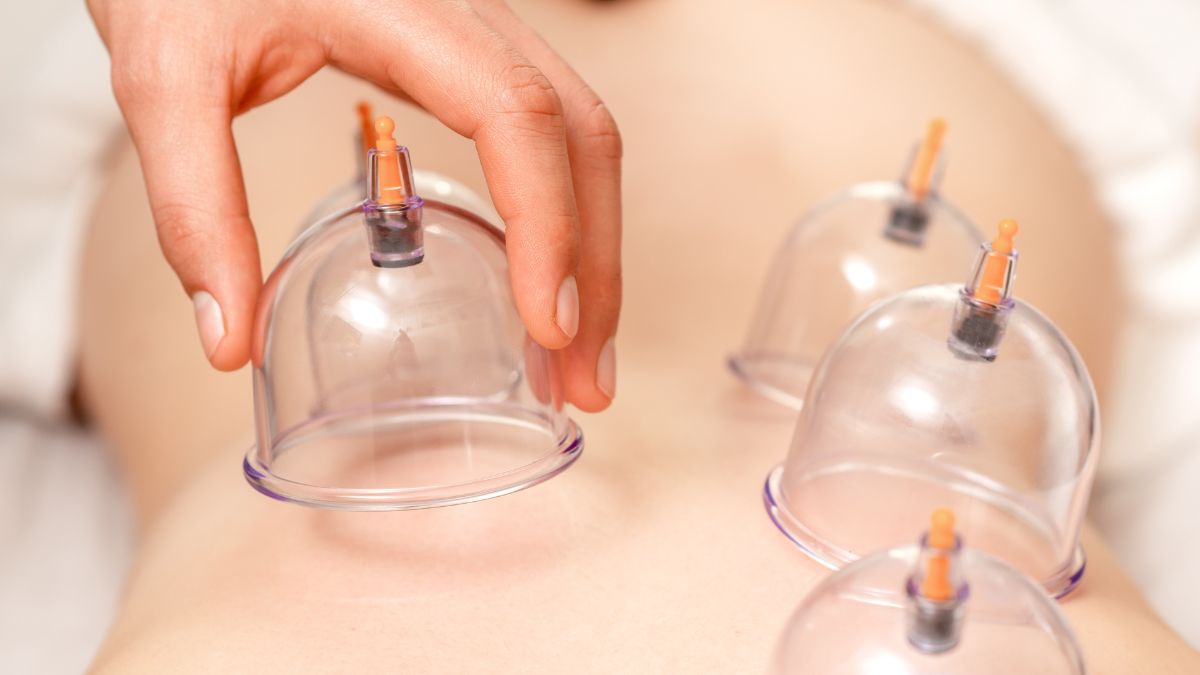
Cupping therapy is a manual technique that creates suction on the skin and superficial fascia. That suction gently lifts the tissues upward. This matters because it is different from therapies that push downward. Many patients with low back pain have tissues that are guarded and sensitive. Strong pressure can feel aggravating, while decompression can feel relieving. In clinical practice, cups are typically placed along the low back, the top of the pelvis, the glute region, and sometimes the outer hip and hamstrings. The intent is not to treat the nerve directly. The intent is to change the tissue environment that influences nerve irritation and pain sensitivity.
Why Cupping Can Change The Way The Low Back And Hips Feel
Most people notice cupping because it changes tension quickly. That does not mean it is magic. It means that suction can alter how the nervous system perceives tight tissue and can improve the way layers of fascia glide. When fascia does not glide well, movement feels restricted and the body responds by increasing tone and guarding. That guarding can compress tissues, limit hip motion, and keep the low back working harder than it should. When cupping reduces guarding and improves glide, movement becomes easier, and symptoms that were being driven by stiffness and restriction often settle.
Cupping can also help when trigger points are involved. Trigger points in the glutes and hip rotators can refer pain down the leg and mimic nerve pain. Some people describe this as sciatica even though the nerve is not the primary problem. Decompressive manual therapy can reduce the sensitivity of these trigger points and decrease referred pain patterns.
When Cupping Therapy Tends To Help The Most
Cupping therapy tends to be most helpful when your symptoms have a strong mechanical and muscular component. These are the cases where you can almost predict your flare ups based on posture and workload. Long drives, long sitting at a desk, repeated bending, heavy lifting, or high-volume workouts can trigger symptoms. The pain may start as low back tightness, then shift into glute tension, then radiate down the leg. Often, walking provides partial relief because movement temporarily reduces stiffness. Sitting, especially slouched sitting, tends to worsen symptoms because it places sustained stress on the low back and hips.
In these patterns, cupping can reduce the tissue tension that is feeding the cycle. Patients often report that the low back feels less locked, the hips feel more open, and the leg symptoms are less sharp. Some notice that symptoms travel less far down the leg or occur less frequently. These changes are meaningful even if symptoms are not fully gone after one visit because they indicate that the tissue environment is becoming less reactive.
Common Contributors That Make Sciatica Persistent
Many chronic cases are maintained by a combination of factors rather than a single injury. The most common contributors include persistent hip tightness, limited hip rotation, weak glute activation, overactive low back stabilizers, poor recovery after training, and prolonged sitting without movement breaks. Stress and poor sleep often amplify symptoms by increasing muscle tone and reducing pain tolerance. This is one reason cupping alone can feel helpful for a day or two, then symptoms return. The tissue changed, but the drivers were not addressed long enough to create stability.
A strong plan uses cupping to create change, then uses that change as an opportunity to improve movement habits and reduce recurring strain.
When Cupping Therapy Has Limits And When To Get Evaluated
Cupping therapy has real value, but it has limits. If the main driver is significant nerve compression, cupping may reduce secondary tightness and improve comfort, but it may not resolve symptoms fully. This is especially true if you have progressive neurologic symptoms or symptoms that do not respond to position changes.
It is important to understand that seeking additional evaluation is not a failure. It is good clinical decision-making. An acupuncture clinic that is thoughtful will support coordination with your physician, physical therapist, or imaging when appropriate.
Symptoms That Should Not Be Managed With Cupping Alone
Seek urgent medical evaluation if you experience loss of bowel or bladder control, numbness in the saddle region, sudden or progressive weakness, foot drop, severe pain after major trauma, fever with severe back pain, or unexplained weight loss with worsening symptoms. These red flags are not common, but they matter. Even without red flags, persistent severe pain that worsens over time deserves medical attention so you do not miss a condition that requires specific management.
For many patients, the most practical approach is dual-track care. Use acupuncture and cupping to reduce pain and improve function while also getting the appropriate medical workup if symptoms suggest a spinal driver.
What A Good Treatment Plan Looks Like For Low Back Pain And Sciatica
People often judge a therapy based on a single session. For sciatica, that is not always fair because the condition is often maintained by long-standing tissue and movement patterns. A well-designed plan has a clear assessment, a defined starting frequency, measurable goals, and a re-evaluation point. It also has an explanation that makes sense. You should understand what the clinic believes is driving your symptoms and why the selected therapies match that pattern.
Cupping should be used strategically, not randomly. Sometimes the priority is the low back paraspinals because guarding is preventing normal movement. Sometimes the priority is the glute medius and deep hip rotators because referral patterns are driving radiating pain. Sometimes the hamstrings and calf fascial lines are involved. A skilled provider adapts based on your presentation, rather than applying the same cup placement every time.
How Cupping Works Best With Acupuncture
Cupping can address local restriction and sensitivity. Acupuncture can help regulate pain signaling, reduce inflammation, and support nervous system balance. This pairing matters for sciatica because the pain experience is not only mechanical. It is also neurologic. When the nervous system is on high alert, tissues guard more, pain feels sharper, and flare ups last longer. Many patients notice that combining acupuncture and cupping improves sleep and reduces baseline tension, which then reduces the frequency of flare ups.
Some clinics also incorporate trigger point therapy or neuropuncture depending on the symptom pattern. Trigger point therapy can be helpful when specific knots reproduce leg symptoms. Neuropuncture may be considered when nerve-related sensations dominate, such as persistent tingling or numbness. These are not magic techniques. They are tools that should be matched to findings and used with clear intent.
What To Expect During Cupping For Sciatica
A professional session begins with a brief check-in. A provider should ask what changed since the last visit, what triggered symptoms, and what movements feel limited. Many clinics will assess simple functions such as bending, hip rotation, or a short gait observation. The purpose is to make cupping placement and technique more precise.
During cupping, you will feel a pulling sensation. It should feel intense but tolerable, and it should not feel sharp. Some people describe it as a deep stretch. Cups may stay in place for several minutes, or the provider may use moving cupping to address broader restriction patterns. Moving cupping often feels like firm traction across the tissue.
After cupping, redness and circular marks can appear. These marks may last several days. They are common and are not usually dangerous, but they should be explained clearly. You should also be told what aftercare supports results and what signs would be unusual.
How Aftercare Influences Results
Hydration helps. Gentle walking is often beneficial because it reinforces mobility gains. Many patients do best when they avoid heavy lifting, intense training, or long static sitting later that day, especially after the first session. If the area feels sore, heat can help stiffness, while ice may be appropriate if the area feels inflamed. The best aftercare advice is tailored. A good clinic explains it based on your response, not as a generic script.
Realistic Outcomes And A Timeline That Makes Sense
Some patients feel immediate improvement. Others feel looser but still experience symptoms. Both can be normal. A useful way to measure progress is not only pain intensity, but also function and reactivity. Function includes how long you can sit, how far you can walk, how comfortable you feel climbing stairs, and whether you can sleep without constant position changes. Reactivity includes how quickly flare-ups occur and how long they last after a trigger.
For chronic patterns, one of the most meaningful early improvements is that flare-ups become less frequent and recover faster. A flare-up that used to last three days might resolve in one day. Another meaningful change is that symptoms travel less far down the leg or shift from sharp to dull. These are signs that irritation is decreasing.
How Many Visits Before You Should Expect A Directional Change
A reputable plan includes a re evaluation point. Many clinics start with a short initial series and then reassess. The number of visits varies based on chronicity, workload, and the presence of structural factors, but you should not be left guessing. If nothing changes after a reasonable trial, the plan should be adjusted. That may mean changing techniques, adding movement guidance, coordinating with other providers, or recommending medical evaluation if that has not occurred.
Choosing A Clinic That Uses Cupping Responsibly
Cupping therapy is widely available. Quality varies. The most important factor is not whether a clinic offers cupping, but whether the clinic can explain why cupping is being used in your specific case and how progress will be tracked. You want a provider who can describe a coherent plan in plain language, who welcomes questions, and who does not oversell outcomes.
Signs Of A Thoughtful Approach
A thoughtful clinic assesses movement and symptoms at each visit, adjusts treatment based on response, and ties recommendations to measurable goals. The clinic also discusses safety and comfort. You should know that you can speak up if suction feels too strong. You should receive clear guidance on marks, soreness, and aftercare. You should also feel that the plan fits your schedule and budget without pressure.
Begin Your Care With Best Acupuncture OC
If you are dealing with low back pain or sciatica and you want a plan that addresses both symptoms and drivers, start with a clinical consultation at Best Acupuncture OC. The clinic can evaluate your symptom pattern, determine whether cupping therapy is appropriate for you, and build a treatment plan that matches your goals, comfort level, and schedule. You can learn more about Dr. Narges Sarrafan and the clinic’s approach to care.
To get started, schedule online at Schedule An Appointment or call (949) 867-0150 to reserve a time.
Medical Note: This article is for educational purposes only and does not replace professional medical advice. For diagnosis and medical management, consult a qualified healthcare provider.